
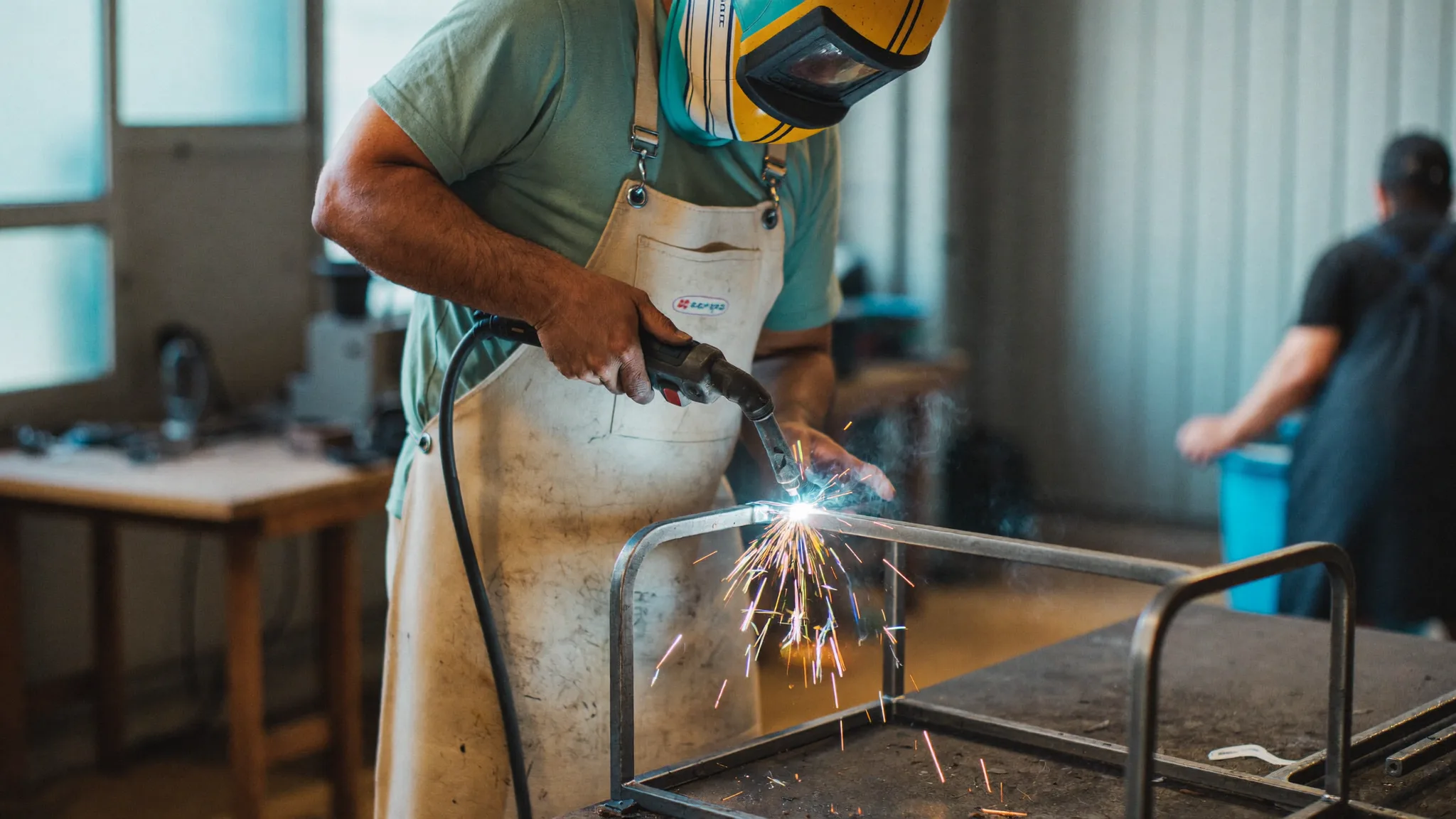
What insurance does a welder need?
There's no one-size answer. The right mix depends on how you work, who you work for, and what your contracts ask for. These are the coverages a welder typically looks at first:
General liability
Covers fire damage, third-party injuries, and completed-operations claims from hot work, with the $1,000,000 per-occurrence limit GCs and property owners typically request.
Business property
Your welder, torches, tanks, and rig represent a serious investment, and this helps protect that equipment against theft and damage.
Commercial auto
A truck hauling a welding rig and gas tanks between job sites is a work vehicle, and personal auto policies often exclude business use.
Coverage always depends on your specific situation. The fastest way to see what fits is to get a quote and review your options.
What does it protect against?
The risks that matter aren't abstract. They're the everyday accidents of the work. A few scenarios that turn into real claims:
Sparks ignite a fire during hot work
A grinding spark or a stray arc ignites insulation, sawdust, or fuel vapor near your work area, and a small flare-up spreads before anyone notices. Fire damage from hot work is one of the most expensive claims a welder can cause, and it's exactly what general liability is designed to help cover.
A client's equipment is damaged mid-repair
You're welding a cracked frame or a broken fitting on a client's machine, and heat distortion or a slipped torch damages a part beyond the repair itself. The client's claim for the ruined equipment lands on your business, not theirs.
A weld fails after you leave the job
A structural weld you completed on a railing or a support bracket gives way weeks later, and someone is hurt or property is damaged. Completed-operations claims arrive after the invoice is paid, which is why coverage that includes completed operations matters for a trade like welding.
Someone is hurt by arc flash or equipment on site
A bystander glances at an unshielded arc and suffers flash burn, or a coworker trips over your welding leads and cables. Third-party injuries at the job site, whether it's a client, a passerby, or another sub, are the classic general liability claim.
Certificates of insurance
General contractors are the most common source of certificate requests for welders: most collect proof of general liability, and often workers comp, before clearing a sub for hot work on site. Fabrication shops and property owners hiring for on-site repairs ask for the same. Olli's general liability policies include instant certificates, so a job doesn't stall waiting on paperwork.
New to certificates? Start with our guide to the certificate of insurance: what's on one, who asks for it, and how to provide yours.
Related trades
Other trades & home services professions face many of the same risks. See how the coverage compares: