
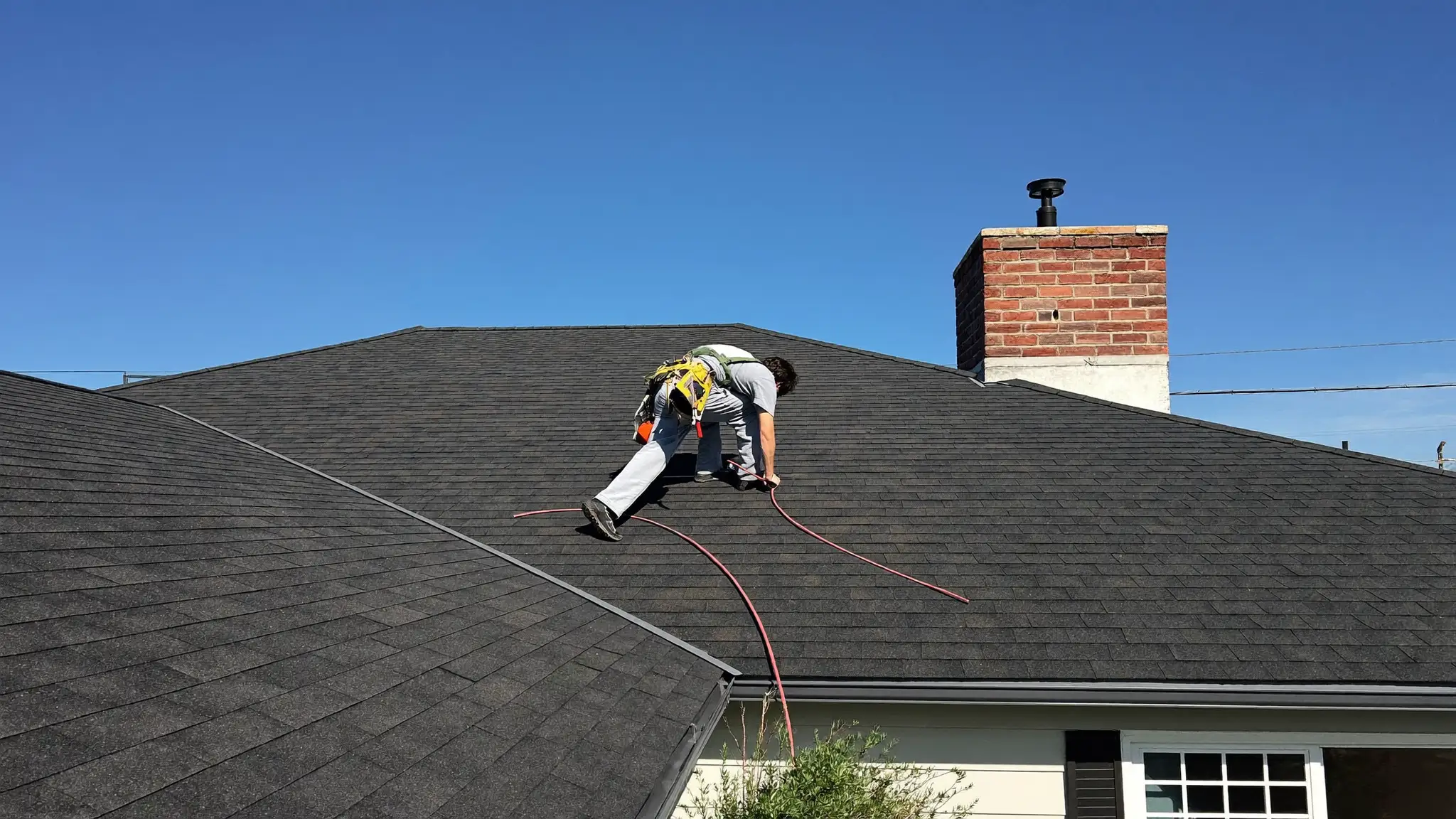
What insurance does a roofer need?
There's no one-size answer. The right mix depends on how you work, who you work for, and what your contracts ask for. These are the coverages a roofer typically looks at first:
General liability
Covers property damage from dropped materials, debris, and tarp failures, plus third-party injuries, with the $1,000,000 per-occurrence limit GCs and property managers typically request.
Workers' compensation
Falls are the leading injury in roofing, and workers comp is built to cover a crew member's medical bills and lost wages after one, which GCs often want on your certificate too.
Commercial auto
The truck and trailer hauling ladders, tear-off equipment, and bundles of shingles is a work vehicle, and personal auto policies typically exclude that use.
Coverage always depends on your specific situation. The fastest way to see what fits is to get a quote and review your options.
Framing and structural repair work alongside your roofing jobs? See our guide to carpenter insurance.
What does it protect against?
The risks that matter aren't abstract. They're the everyday accidents of the work. A few scenarios that turn into real claims:
A dropped bundle goes through a skylight
A bundle of shingles staged near the edge slips and crashes through a client's skylight below. The property damage, and any injury if someone's underneath, lands on the crew that dropped it, which is exactly the kind of third-party claim general liability is designed to help cover.
A worker falls from the roof
A crew member loses footing on a steep pitch and falls, breaking an arm or worse. Falls are the single biggest injury risk in roofing, and when the person hurt is your employee, that's a workers comp claim, not a general liability one.
A tarp fails and water gets into the house
An overnight tarp comes loose in the wind, and rain gets into the attic and drips through a finished ceiling before anyone notices. Water damage from an open roof mid-tear-off is one of the most expensive claims a roofer can face.
Debris damages a car or a neighbor's property
Old shingles thrown off the roof land on a client's parked car, or a piece of flashing blows into a neighbor's yard and cracks a window. Property damage from tear-off debris is a routine general liability claim in this trade.
Certificates of insurance
Roofers get asked for a certificate of insurance on nearly every job that isn't a small repair. General contractors require one from every roofing sub before they're cleared to set up, property managers want proof before a crew works on an occupied building, and many homeowners now ask for one before a full tear-off. The request is usually general liability at a set limit, with a workers comp line once you run a crew. Olli's general liability policies include instant certificates, so a rain-delayed start doesn't turn into a paperwork delay too.
New to certificates? Start with our guide to the certificate of insurance: what's on one, who asks for it, and how to provide yours.
Related trades
Other trades & home services professions face many of the same risks. See how the coverage compares: