
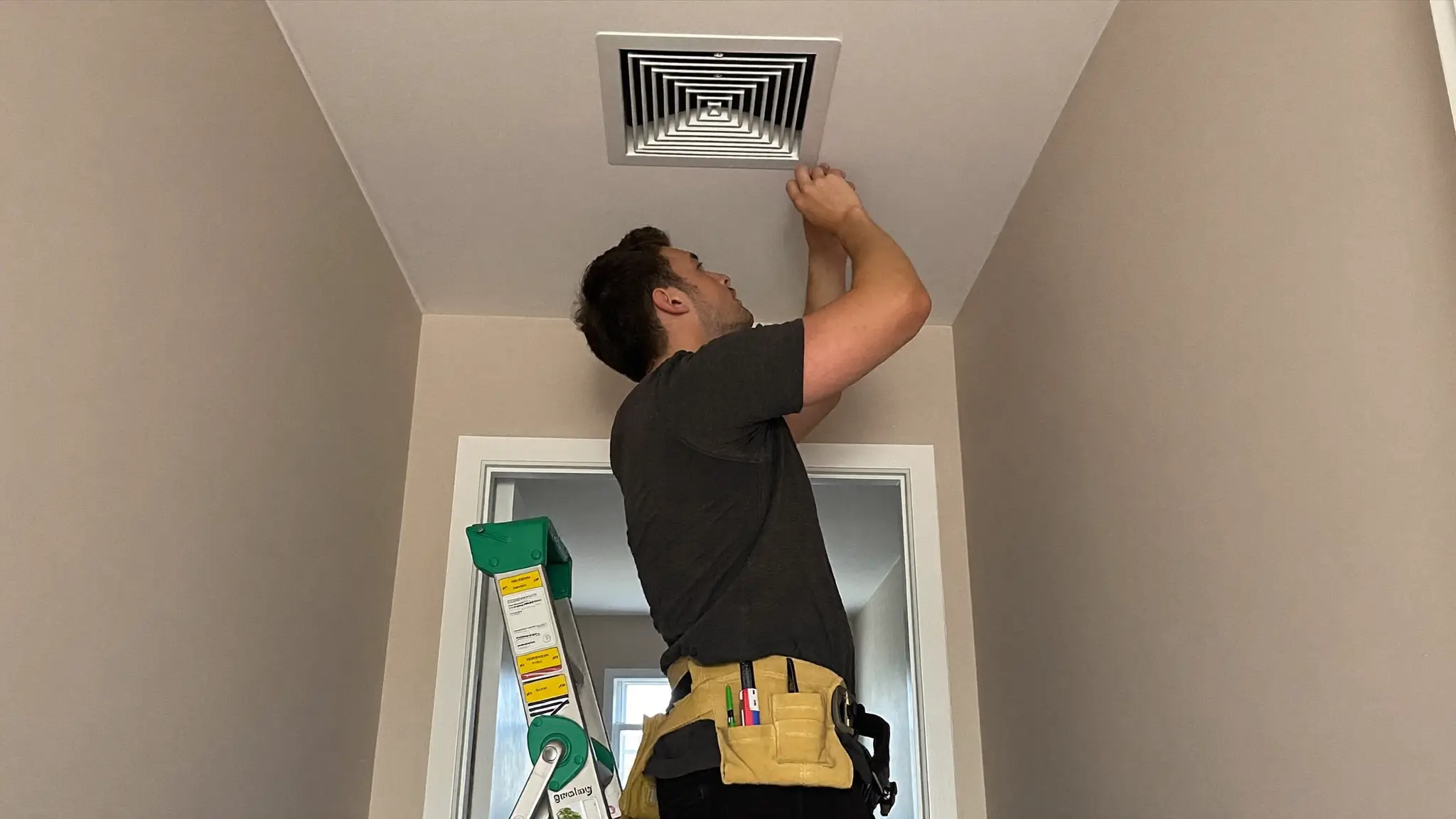
What insurance does an HVAC technician need?
There's no one-size answer. The right mix depends on how you work, who you work for, and what your contracts ask for. These are the coverages an HVAC technician typically looks at first:
General liability
Covers fire, water, and other property damage from installs and repairs, plus third-party injuries, with the $1,000,000 per-occurrence limit GCs and property managers typically request.
Workers' compensation
Shocks, burns, and lifting injuries come with the job, and workers comp is built to cover a technician's medical bills and lost wages once you have employees.
Commercial auto
A van stocked with units, refrigerant, and tools is a work vehicle, and personal auto policies typically exclude business use.
Coverage always depends on your specific situation. The fastest way to see what fits is to get a quote and review your options.
Handling the electrical side of installs yourself? See our guide to electrician insurance.
What does it protect against?
The risks that matter aren't abstract. They're the everyday accidents of the work. A few scenarios that turn into real claims:
A brazing torch starts a fire
Soldering a refrigerant line in a tight mechanical closet, the torch scorches insulation or ignites nearby debris. Fire damage from hot work is one of the more serious property claims an HVAC business can face, and general liability is designed to help cover it.
A new install leaks refrigerant or carbon monoxide
A cracked heat exchanger or a bad connection on a furnace lets carbon monoxide into a home, or a refrigerant leak exposes occupants to fumes. Claims tied to a completed install, discovered after you've left the job, fall under products and completed operations.
A condensate line backs up and floods a ceiling
A clogged or improperly run condensate line lets water pool above a finished ceiling until it lets go. Water damage from an HVAC install or repair is a routine property damage claim in this trade.
A technician is shocked or burned on the job
A tech is hurt working live on an electrical disconnect, or burned handling a hot compressor line. Employee injuries like these are handled by workers comp, not general liability, which is why crews are typically asked to carry both.
Certificates of insurance
HVAC technicians get asked for a certificate of insurance on new construction, commercial jobs, and property management contracts especially. General contractors collect one from every mechanical sub before clearing them for a site, and property managers want proof before a crew touches a building's systems. The request is usually general liability at a set limit, with a workers comp line once you run a crew. Olli's general liability policies include instant certificates, so an install schedule doesn't stall on paperwork.
New to certificates? Start with our guide to the certificate of insurance: what's on one, who asks for it, and how to provide yours.
Related trades
Other trades & home services professions face many of the same risks. See how the coverage compares: