
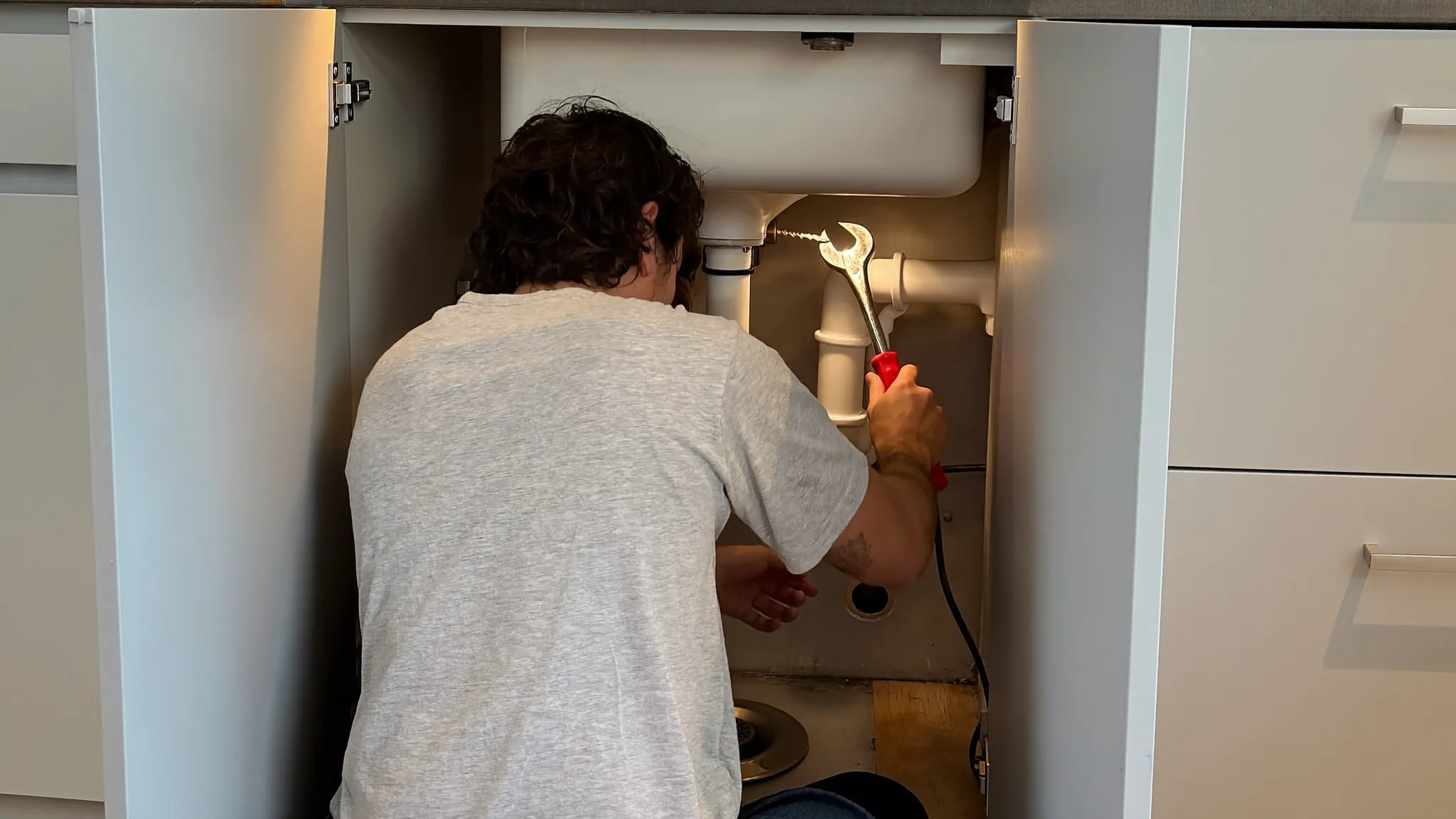
What insurance does a plumber need?
There's no one-size answer. The right mix depends on how you work, who you work for, and what your contracts ask for. These are the coverages a plumber typically looks at first:
General liability
The core policy for plumbers. It handles third-party property damage and injuries, including completed operations, with the $1,000,000 per-occurrence limit GCs typically request.
Workers' compensation
Once you have employees, job-site injuries like a helper's wrenched back or a burn are handled here, and GCs often want it on your certificate.
Commercial auto
Your van full of tools and fittings is a work vehicle, and personal auto policies often exclude business use.
Coverage always depends on your specific situation. The fastest way to see what fits is to get a quote and review your options.
What does it protect against?
The risks that matter aren't abstract. They're the everyday accidents of the work. A few scenarios that turn into real claims:
A fitting fails and floods the house
A supply line you installed lets go overnight and water runs through the kitchen into the finished basement. Flooring, drywall, cabinets: the homeowner's claim lands on your business, and water damage claims are among the most expensive a trade can face.
A soldering job scorches more than the pipe
Heat from a torch chars a joist or ignites insulation inside a wall cavity. Even a small fire caught early means repairs, smoke damage, and a property owner who expects your policy to pay for it.
Someone trips over your equipment
A homeowner steps around your drain machine in a hallway and falls. Third-party injuries on the job, whether it's a client, a tenant, or another sub, are the classic general liability claim.
A repair fails weeks after you leave
The water heater connection you finished last month starts leaking and damages the unit below. Completed-operations claims arrive after the job is done, which is why coverage that includes completed operations matters for trades.
Certificates of insurance
Plumbers get asked for a certificate of insurance constantly: general contractors collect one from every sub before work starts, property managers require one from every vendor in their buildings, and many homeowners now ask before larger jobs. The request is usually general liability at specific limits, with a workers comp line if you have a crew. Olli's general liability policies include instant certificates, so proof is ready the moment your policy is.
New to certificates? Start with our guide to the certificate of insurance: what's on one, who asks for it, and how to provide yours.
Related trades
Other trades & home services professions face many of the same risks. See how the coverage compares: