
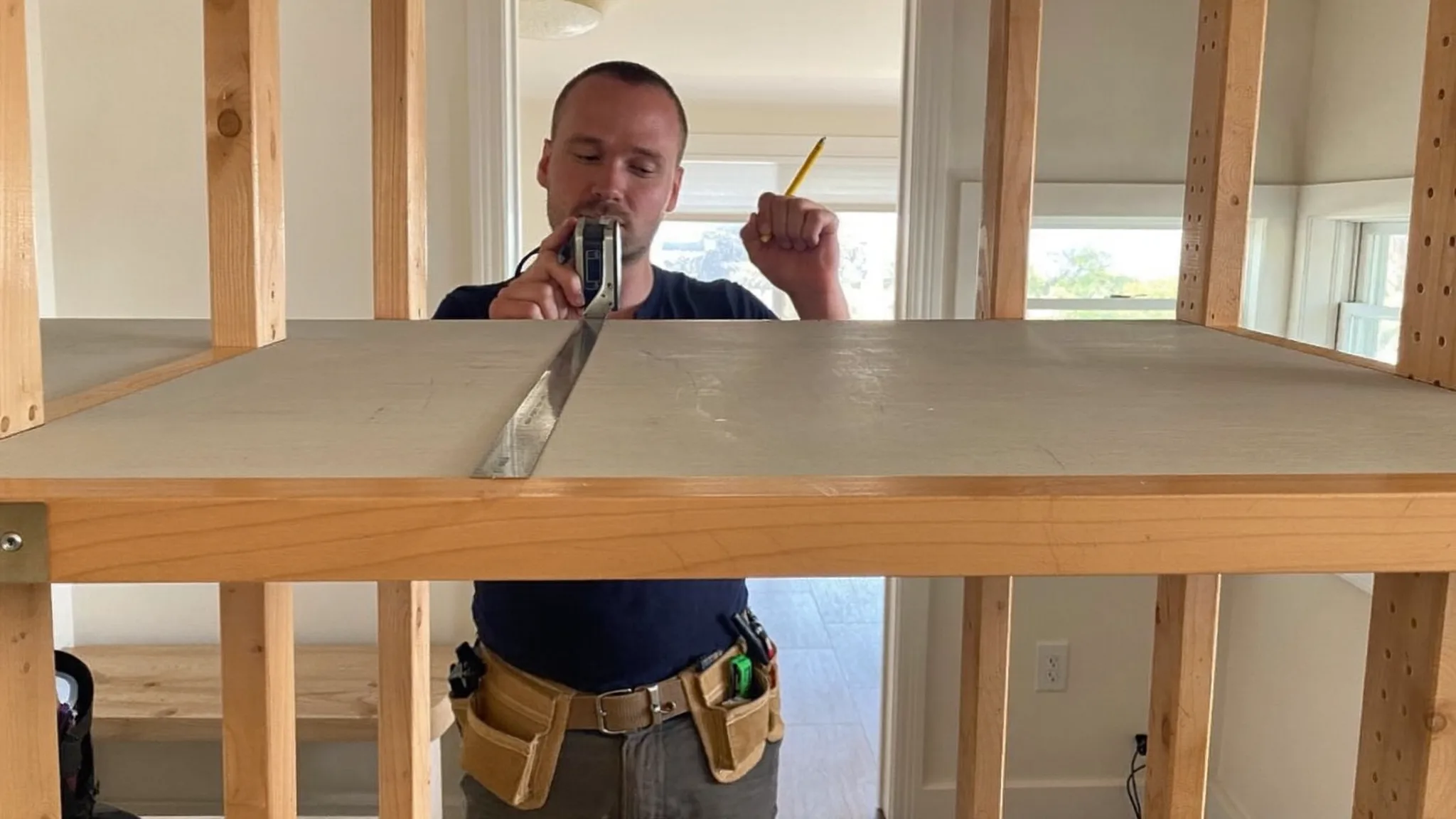
What insurance does a handyman need?
There's no one-size answer. The right mix depends on how you work, who you work for, and what your contracts ask for. These are the coverages a handyman typically looks at first:
General liability
The essential policy for handyman work. It covers client property damage and injuries, including completed operations, with the $1,000,000 per-occurrence limit property managers typically request.
Business property
Your tools travel to every job and disappear from vans and job sites more than any other trade asset, so this helps protect the kit your income depends on.
Commercial auto
A truck or van used for jobs counts as a business vehicle. Personal auto policies often exclude business use.
Coverage always depends on your specific situation. The fastest way to see what fits is to get a quote and review your options.
What does it protect against?
The risks that matter aren't abstract. They're the everyday accidents of the work. A few scenarios that turn into real claims:
You damage something in a client's home
A drill bit finds a water line behind the drywall, or a ladder swings into a chandelier. Working inside finished homes means everything around you is someone else's property, and a single slip can cost more than a month of jobs.
A client trips over your tools
A homeowner steps through the hallway where you're working and catches a foot on your cord or toolbox. Their injury, and any claim that follows, lands on your business. That is exactly the scenario general liability is designed for.
A repair fails after you leave
The shelf bracket you mounted pulls out of the wall a week later and takes a TV down with it, or a faucet repair starts leaking into the cabinet. Completed-operations claims arrive after the invoice is paid.
Damage spreads beyond the job
A small tiling job goes wrong and water finds its way into the unit below. Now the neighbor's ceiling is part of your problem. In condos and rentals, third-party damage can multiply fast, which is why property managers insist on certificates.
Certificates of insurance
For a handyman, certificate-of-insurance requests come from property managers first: most require a COI from every vendor working in their buildings and track expiration dates. Homeowners increasingly ask too, since proof of insurance is one of the quickest ways to stand out from uninsured competitors on the same job boards. Olli's general liability policies include instant certificates, so you can send proof the same day a property manager asks for it.
New to certificates? Start with our guide to the certificate of insurance: what's on one, who asks for it, and how to provide yours.
Related trades
Other trades & home services professions face many of the same risks. See how the coverage compares: