
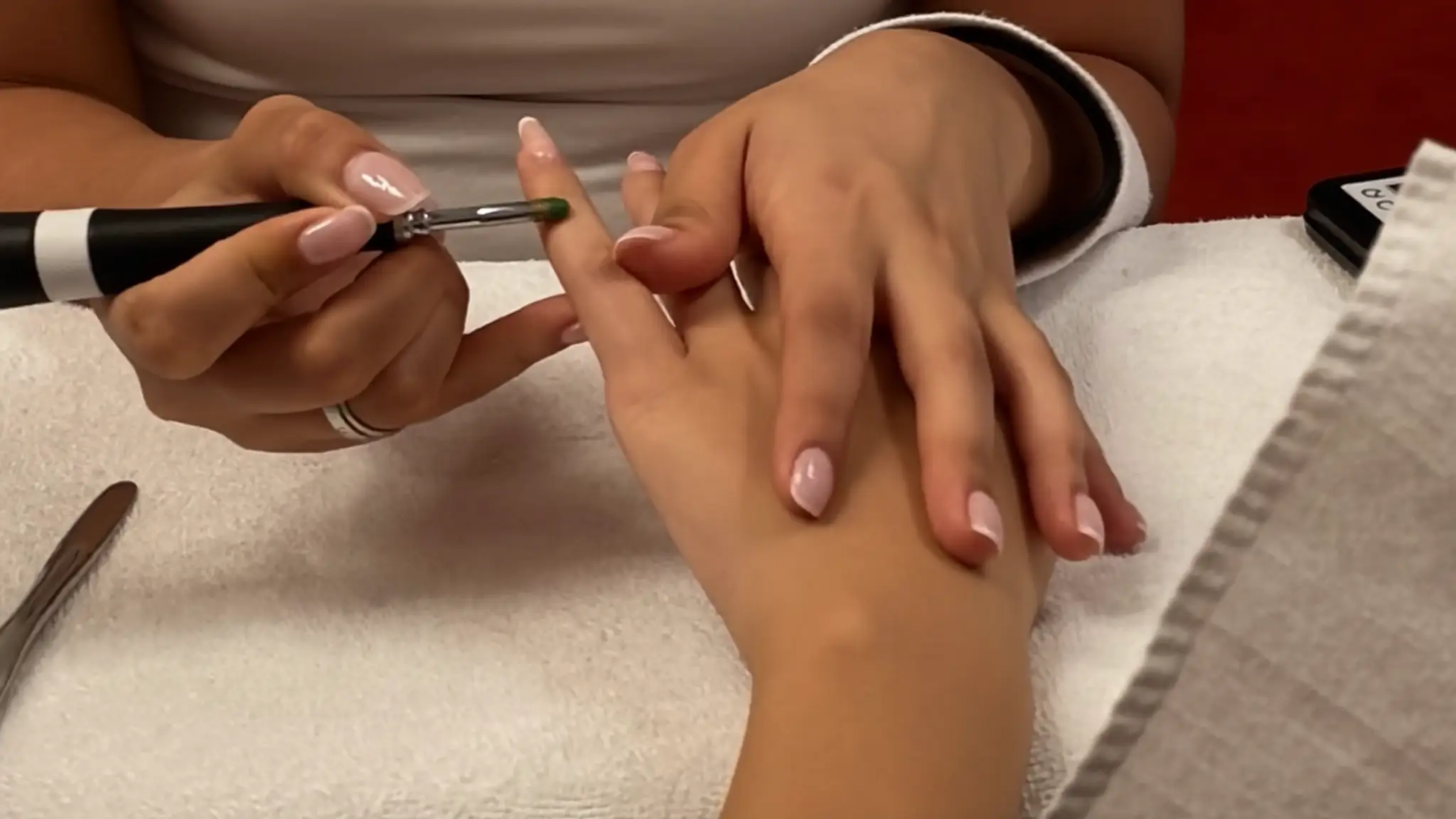
What insurance does a nail technician need?
There's no one-size answer. The right mix depends on how you work, who you work for, and what your contracts ask for. These are the coverages a nail technician typically looks at first:
General liability
Covers third-party injuries and property damage around your station, like a slip on spilled acetone, with the $1,000,000 per-occurrence limit salons typically request from booth renters.
Professional liability
For claims that the service itself caused harm: an infection from a cuticle cut, a reaction to acrylic or gel product, a burn from an e-file. It's the risk unique to working on people.
Business property
Polish, gel, acrylic stock, and tools like e-files and UV lamps. Helps protect the kit your appointment book depends on against theft and damage.
Coverage always depends on your specific situation. The fastest way to see what fits is to get a quote and review your options.
What does it protect against?
The risks that matter aren't abstract. They're the everyday accidents of the work. A few scenarios that turn into real claims:
A cuticle cut leads to infection
A nip during cuticle work breaks the skin, and without proper sanitation between clients, the small cut turns into a spreading infection. Whether tools were sanitized and the technique was appropriate becomes a professional liability question.
A client reacts to acrylic, gel, or polish
A gel polish cured under UV light, or an acrylic monomer, triggers a burning sensation or an allergic reaction the client didn't expect. The product and application become the center of the claim, which is professional liability territory.
A drill or file burns or damages a nail bed
An e-file used too aggressively thins a nail bed or burns the skin around it, and a client is left with a visible injury that takes weeks to heal. This is the risk that comes with the tools of the job.
Someone slips near your station
Acetone spilled during a soak-off, or a client's dropped shoe on wet flooring near a pedicure chair, sends a client or coworker down. Third-party injuries around your station are the classic general liability claim.
Certificates of insurance
For a nail technician, the certificate-of-insurance request usually comes from the salon: most owners require booth renters and independent techs to show a COI, often naming the salon as certificate holder, before working a station. Nail bars, mobile bridal bookings, and event work ask for the same. Olli's general liability policies include instant certificates, so a new station doesn't wait on paperwork.
New to certificates? Start with our guide to the certificate of insurance: what's on one, who asks for it, and how to provide yours.
Related trades
Other beauty & wellness professions face many of the same risks. See how the coverage compares: