
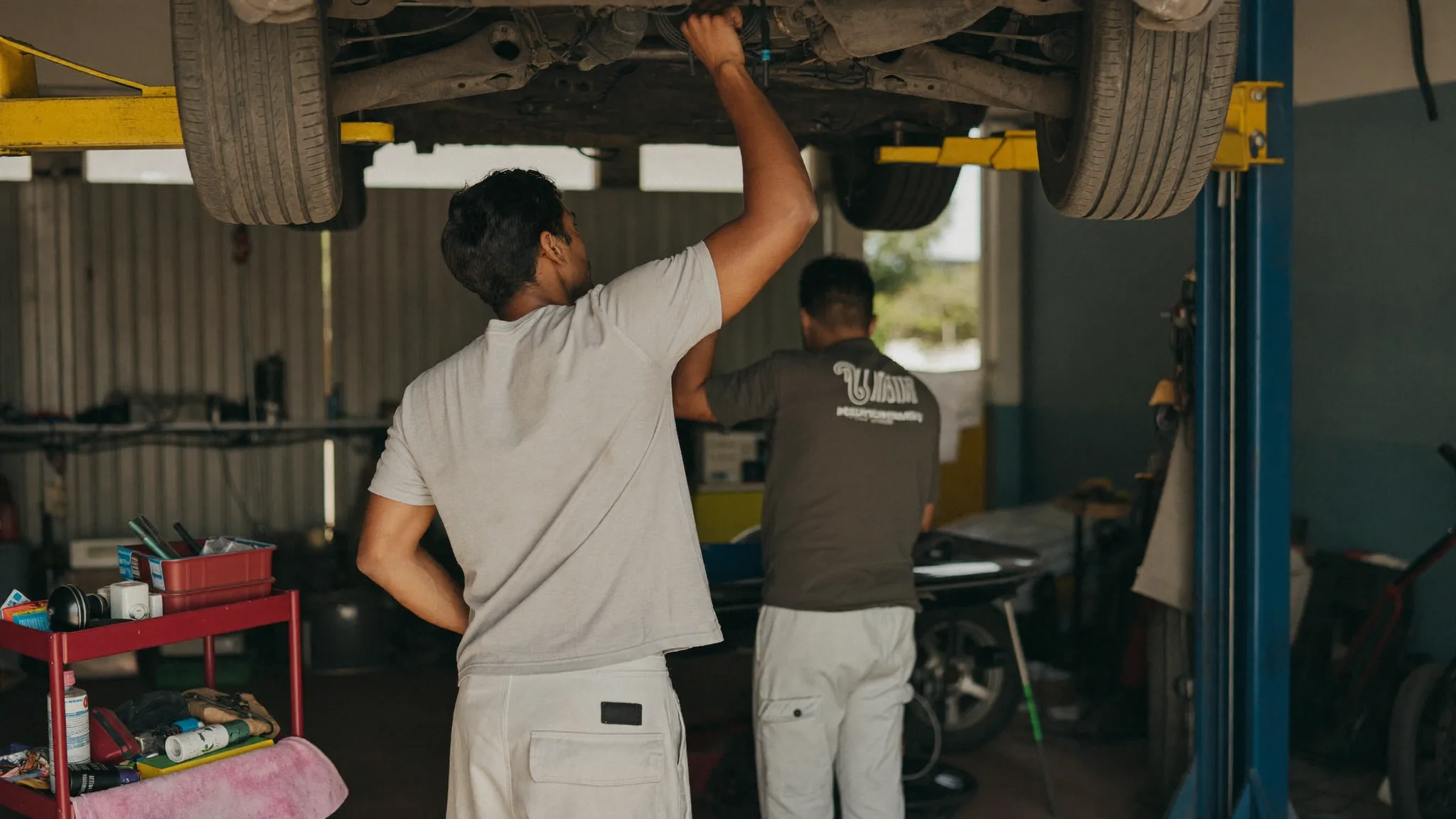
What insurance does a mechanic need?
There's no one-size answer. The right mix depends on how you work, who you work for, and what your contracts ask for. These are the coverages a mechanic typically looks at first:
General liability
Covers third-party injuries at your shop, like a customer slipping near a lift, and property damage claims from your operations, with the $1,000,000 per-occurrence limit landlords and commercial leases typically request.
Commercial auto
Test drives, parts runs, and any vehicle you drive for the business need coverage beyond a personal auto policy, which typically excludes business use.
Workers' compensation
Once you have technicians working lifts, tools, and diagnostics, their on-the-job injuries are handled here, and commercial leases sometimes want it on your certificate.
Business property
Lifts, diagnostic equipment, and tool inventory represent a real investment, and this helps protect them against fire, theft, and damage.
Coverage always depends on your specific situation. The fastest way to see what fits is to get a quote and review your options.
What does it protect against?
The risks that matter aren't abstract. They're the everyday accidents of the work. A few scenarios that turn into real claims:
A customer slips on an oil spill
A customer walks into the bay to ask about their car and slips on a patch of oil near a lift. Their injury, and any claim that the shop floor wasn't reasonably safe, is a third-party injury claim against your business.
A test drive ends in a wreck
You take a customer's car out to confirm a repair and get into an accident, whether it's your fault or someone else's. Driving a vehicle you don't own for business purposes is exactly the gap commercial auto is built to fill.
A lift or tool injures a technician
A lift fails to lock and a car settles onto a technician underneath, or a torch ignites something nearby. Shop injuries run from strains to serious accidents, and once you have employees, those claims are handled through workers comp.
A fire starts in the bay
A spark near a fuel line or a shorted battery charger starts a fire that damages the shop, the lifts, and the tool inventory overnight. Rebuilding a bay from a fire is one of the costliest setbacks a shop can face.
Certificates of insurance
Landlords and commercial leases are the most common source of a certificate request for a mechanic's shop: most leased bays require proof of general liability before you move equipment in, and some ask for a workers comp line once you staff up. Fleet and dealership referral relationships occasionally ask too. Olli's general liability policies include instant certificates, so a lease signing doesn't stall waiting on paperwork.
New to certificates? Start with our guide to the certificate of insurance: what's on one, who asks for it, and how to provide yours.
Related trades
Other trades & home services professions face many of the same risks. See how the coverage compares: