
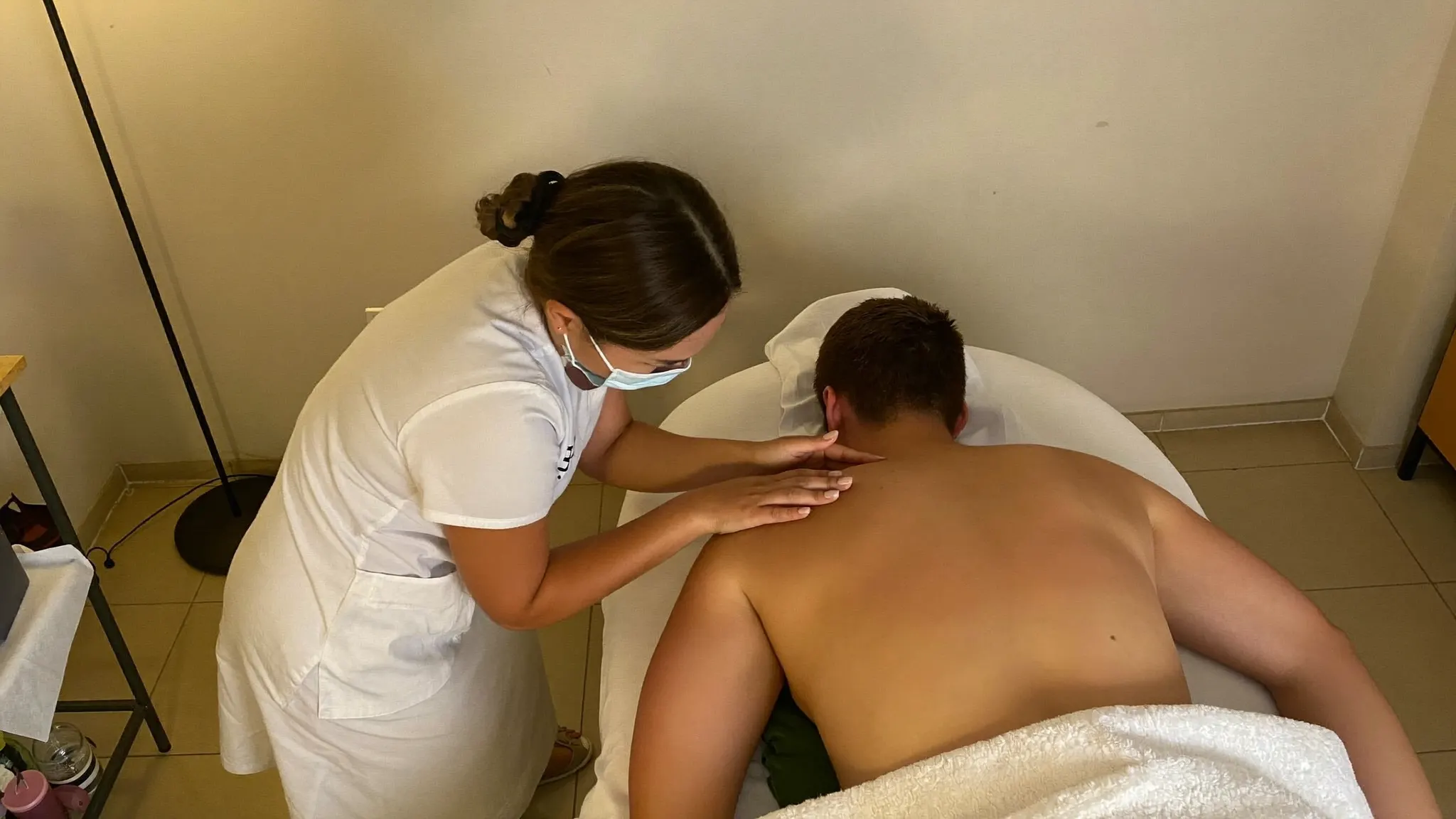
What insurance does a massage therapist need?
There's no one-size answer. The right mix depends on how you work, who you work for, and what your contracts ask for. These are the coverages a massage therapist typically looks at first:
General liability
Covers third-party injuries and property damage in your treatment room, like a slip on spilled oil, with the $1,000,000 per-occurrence limit spas and studios typically request.
Professional liability
For claims that the massage technique itself caused harm: a nerve injury, an aggravated condition, or a reaction to a product used during the session. That's the risk unique to working directly on the body.
Coverage always depends on your specific situation. The fastest way to see what fits is to get a quote and review your options.
What does it protect against?
The risks that matter aren't abstract. They're the everyday accidents of the work. A few scenarios that turn into real claims:
A technique causes a client injury
Deep tissue or trigger-point work on a client with an undiagnosed condition leaves them with a bruised muscle or a pinched nerve. Whether the pressure was appropriate for that client's body becomes the question, and that question is a professional liability claim, not a slip-and-fall.
A client reacts to oil or lotion
A massage oil or aromatherapy blend triggers a skin reaction, or a client's known allergy you weren't told about flares up mid-session. The claim that your product choice caused the harm lands on the treatment itself.
Someone slips in the treatment room
Oil on the floor, a step stool left out, a robe cord across the walkway: a client or another therapist goes down between the table and the door. Third-party injuries in your space are the classic general liability claim.
A client falls getting on or off the table
Massage tables sit low and can be unsteady on a mobile setup. A client loses balance stepping up or down, especially groggy after a session, and the fall becomes a claim against the business that provided the table.
Certificates of insurance
For a massage therapist, the certificate-of-insurance request usually comes from the spa or studio: most owners require room renters and independent therapists to show a COI, often naming the studio as certificate holder, before working with clients on-site. Chiropractic offices, wellness centers, and event bookings ask for the same when you work on location. Olli's general liability policies include instant certificates, so a new room doesn't wait on paperwork.
New to certificates? Start with our guide to the certificate of insurance: what's on one, who asks for it, and how to provide yours.
Related trades
Other beauty & wellness professions face many of the same risks. See how the coverage compares: