
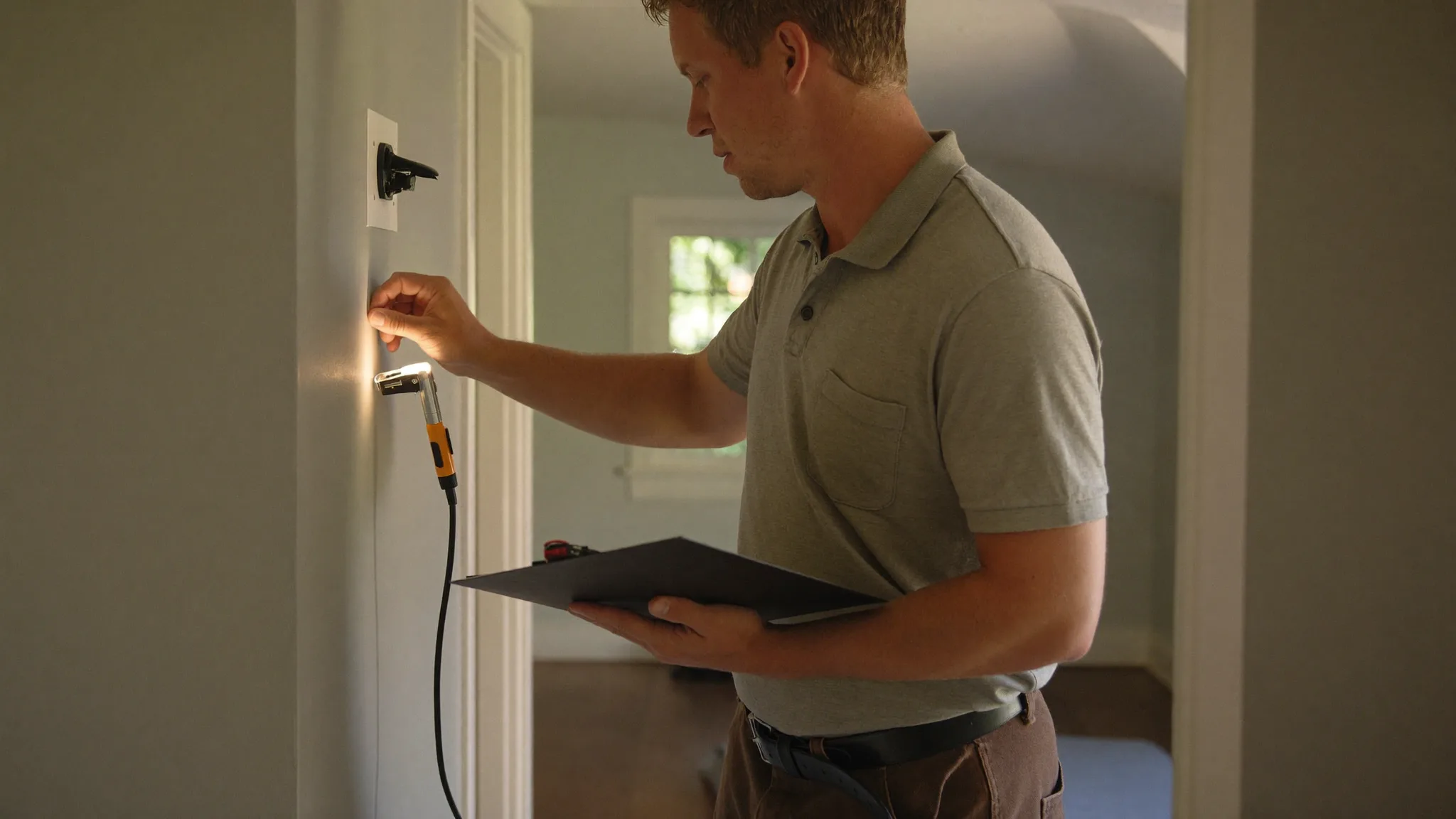
What insurance does a home inspector need?
There's no one-size answer. The right mix depends on how you work, who you work for, and what your contracts ask for. These are the coverages a home inspector typically looks at first:
Professional liability
The core coverage for home inspectors: claims that a missed defect or an inaccurate report cost a buyer money, with limits up to $1,000,000 per claim typically available.
General liability
Covers third-party injuries and property damage on-site, like a fall in a crawlspace or a ladder mark on a wall, and many brokerages ask for proof of it before referring you work.
Business property
Moisture meters, thermal cameras, and ladders travel to every inspection, and this helps protect the equipment your reports depend on against theft and damage.
Coverage always depends on your specific situation. The fastest way to see what fits is to get a quote and review your options.
What does it protect against?
The risks that matter aren't abstract. They're the everyday accidents of the work. A few scenarios that turn into real claims:
A missed defect surfaces after closing
You clear a roof and inspect the attic, but a leak the report missed shows up as rot six months after closing. The new owner claims your inspection should have caught it, and that's a claim against the report itself, not an accident on site.
A safety hazard gets overlooked
Your report doesn't flag a cracked panel cover or an unvented water heater, and the buyer later points to it as a safety issue you should have caught. Claims like this argue your professional judgment, not your conduct, caused the loss.
You fall or get hurt on the property
A ladder slips in a crawlspace, or you put a foot through a soft spot in an attic floor testing insulation. Injuries you sustain on someone else's property, and the liability questions that follow, are a different risk from the report itself.
Your equipment damages the home
A moisture meter probe leaves marks in hardwood, or a ladder dings drywall reaching an attic hatch. Minor as it sounds, a seller or agent can still send you the repair bill.
Certificates of insurance
Real estate brokerages, MLS associations, and referral networks are the usual sources of a certificate request for home inspectors: many won't add you to a referral list without proof of professional liability, sometimes alongside general liability, on file. Individual clients occasionally ask too, especially for larger or commercial inspections. Olli's general liability policies include instant certificates, so a referral request doesn't stall on paperwork.
New to certificates? Start with our guide to the certificate of insurance: what's on one, who asks for it, and how to provide yours.
Related trades
Other professional services professions face many of the same risks. See how the coverage compares: