
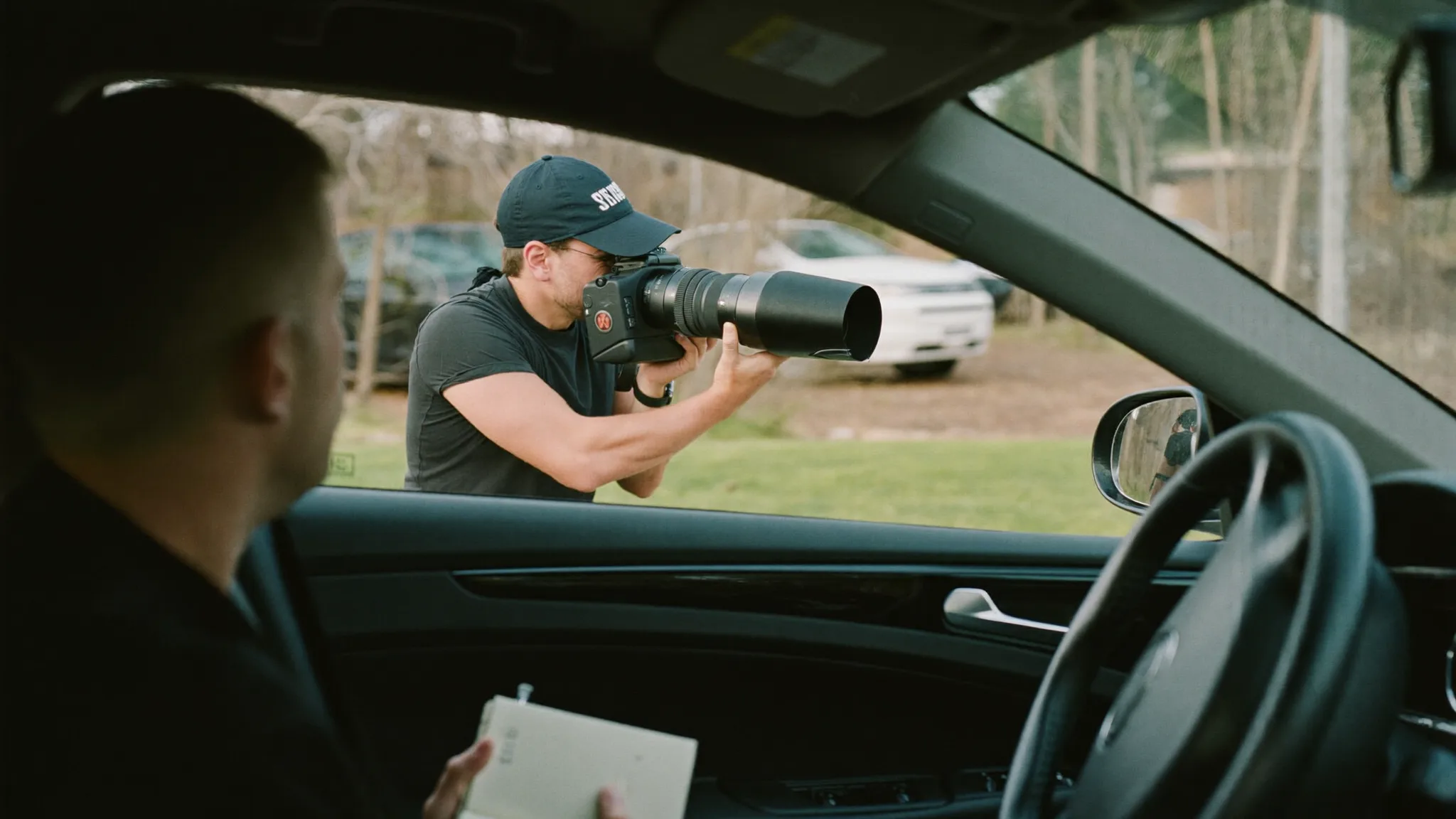
What insurance does a private investigator need?
There's no one-size answer. The right mix depends on how you work, who you work for, and what your contracts ask for. These are the coverages a private investigator typically looks at first:
Professional liability
The core coverage for investigative work: claims that an error, a wrong conclusion, or a flawed report caused a client financial harm, with limits up to $1,000,000 per claim typically available.
Cyber liability
Case files, background checks, and surveillance records hold other people's personal information; this responds to a breach or data exposure involving that information, with limits from $50,000 up to $3,000,000 typically available.
General liability
For the in-person side of the work: client meetings and office visits where an ordinary accident becomes a third-party injury or property damage claim.
Business property
Cameras, GPS units, laptops, and surveillance gear travel with the job, and this helps protect it against theft and damage.
Coverage always depends on your specific situation. The fastest way to see what fits is to get a quote and review your options.
What does it protect against?
The risks that matter aren't abstract. They're the everyday accidents of the work. A few scenarios that turn into real claims:
A report leads a client to a costly decision
A background check or a surveillance report you deliver turns out to be wrong or incomplete, and the client acted on it: a hiring decision, a custody filing, a business deal. Claims that your professional work caused a financial loss are what professional liability is named for.
A subject claims your investigation crossed a line
Months after a case closes, the person you investigated alleges your surveillance or methods caused them harm, even when you followed standard practice. Defending the claim runs up legal bills, and professional liability is designed to help with defense costs.
Case files are exposed in a breach
Your laptop is stolen, or a phishing email gets someone into the system holding background checks, surveillance footage, and client identities. A data breach involving other people's personal information is a cyber liability exposure, not a general liability one.
A client trips during an in-person meeting
A client visits your office to review a case or sign paperwork, and a loose cable or a wet floor turns into a fall. It's an ordinary third-party injury claim, the kind general liability exists for.
Certificates of insurance
For a private investigator, proof-of-insurance requests usually come from the attorneys, insurance companies, and corporate clients who assign case work: they commonly ask investigators to show professional liability coverage at stated limits before assigning a case, and office landlords occasionally ask for a general liability certificate. Olli's general liability policies include instant certificates, so onboarding with a new referral source doesn't stall on paperwork.
New to certificates? Start with our guide to the certificate of insurance: what's on one, who asks for it, and how to provide yours.
Related trades
Other professional services professions face many of the same risks. See how the coverage compares: