
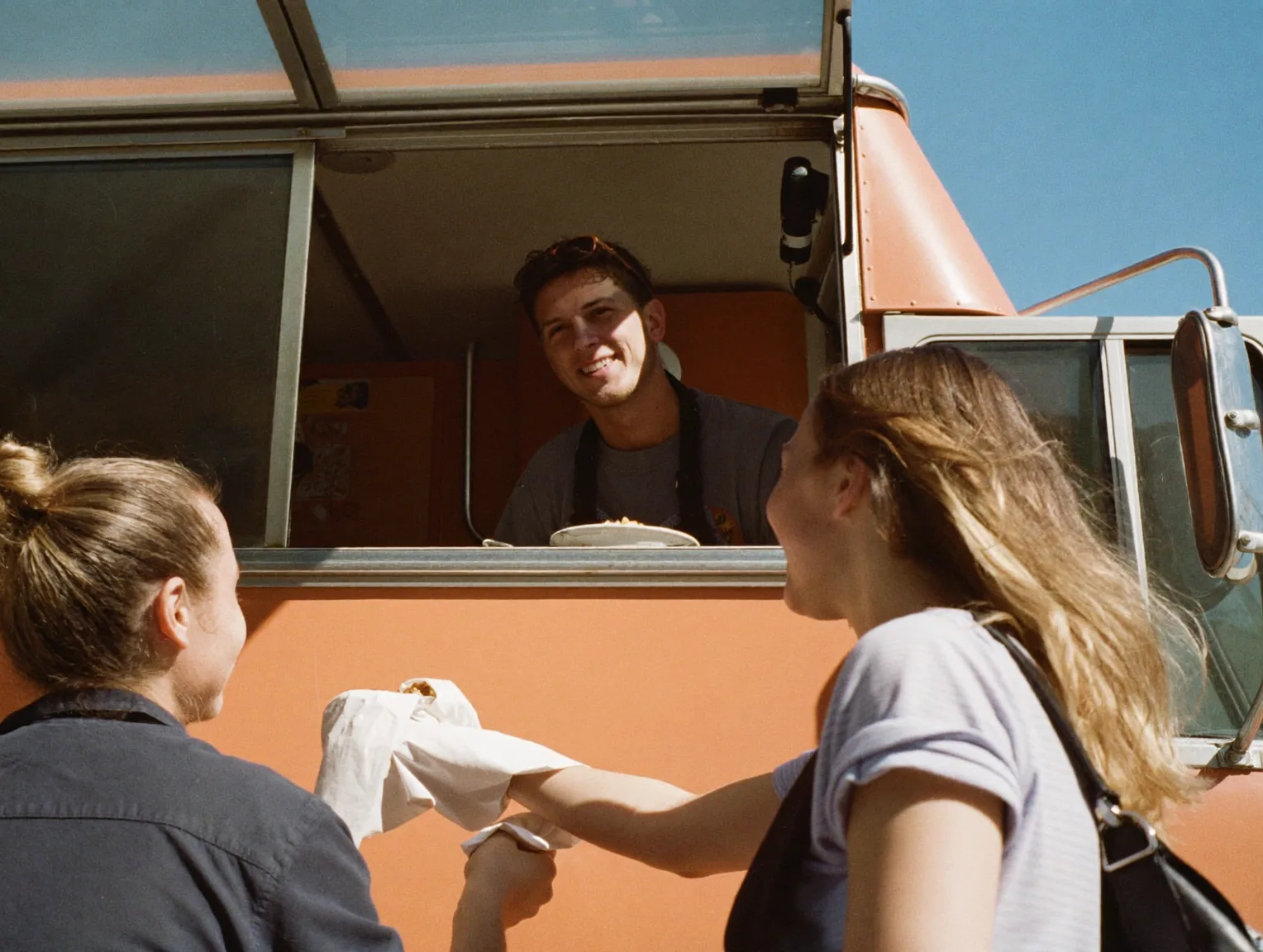
What insurance does a food truck owner need?
There's no one-size answer. The right mix depends on how you work, who you work for, and what your contracts ask for. These are the coverages a food truck owner typically looks at first:
General liability
Customer illness and injury claims, plus damage to venues and event sites, with the $1,000,000 per-occurrence limit event organizers typically require.
Commercial auto
The truck is a business vehicle. Collisions, liability on the road, and physical damage to the vehicle itself belong on a commercial policy.
Business property
Fryers, grills, refrigeration, generators: the equipment your revenue depends on can be protected against theft, fire, and damage.
Workers' compensation
A tight galley with hot oil and knives is an injury-prone workplace. Once you have staff, their work injuries are handled here.
Coverage always depends on your specific situation. The fastest way to see what fits is to get a quote and review your options.
What does it protect against?
The risks that matter aren't abstract. They're the everyday accidents of the work. A few scenarios that turn into real claims:
A customer gets sick after eating your food
A batch held at the wrong temperature sends several customers to urgent care, and one files a claim for medical bills. Foodborne illness claims are the signature risk of serving food, and products liability is the part of general liability aimed at them.
Someone is burned or injured at the window
A customer reaching for an order gets splashed by hot oil, or a kid trips over your generator cable in the service line. Injuries in and around your service area are classic third-party claims.
The truck damages an event venue
Backing into your assigned spot at a festival, you clip a vendor tent. Or your fryer vent scorches an awning at the venue. The organizer expects your insurance to handle it, which is why they collected your certificate first.
A collision on the way to service
En route to a lunch stop, another driver pulls out and you can't stop a truck loaded with equipment in time. A food truck is a commercial vehicle, so accidents on the road are an auto claim rather than a general liability one.
Certificates of insurance
Food trucks may face more certificate-of-insurance requests than any other small business: festivals and event organizers require a COI, usually naming the event as certificate holder or additional insured, before assigning you a spot, commissary kitchens require one to rent prep space, and many cities ask for proof of coverage during permitting. Olli's general liability policies include instant certificates, so a last-minute event booking doesn't stall on paperwork.
New to certificates? Start with our guide to the certificate of insurance: what's on one, who asks for it, and how to provide yours.
Related trades
Other events & food professions face many of the same risks. See how the coverage compares: